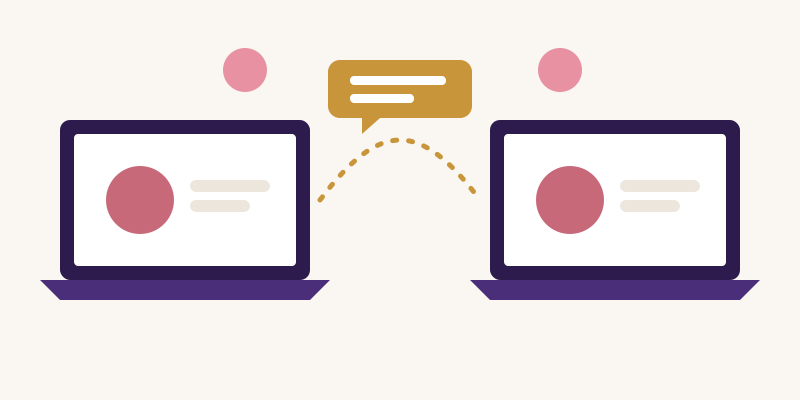
Design work used to depend on being in the same room: pinning drafts to a wall, sketching over each other's printouts, talking through changes at a desk. Today many designers work with clients, developers and colleagues they rarely or never meet in person. Remote collaboration can work very well, but it needs more deliberate habits than sitting side by side. This article covers the practices that make the biggest difference.
Agree on a single source of truth
The most common remote problem is not communication style but version confusion. Files are emailed, downloaded, edited and re-uploaded until nobody is sure which version is current. Choose one shared location for working files, whether a cloud-based design tool or a structured shared drive, and make it the only place where the current version lives. Link to it rather than attaching copies.
Use clear, consistent naming for files and pages, and keep an archive area for superseded work instead of deleting it. When someone asks "is this the latest?", the answer should be obvious from where the file is.
Start every project with a written brief
In person, gaps in a brief are filled by quick conversations. Remotely, they become weeks of misdirected work. A written brief should state the problem, the audience, the deliverables and formats, constraints such as brand guidelines and accessibility requirements, the decision-maker and the schedule. Asking the client or team to confirm the brief in writing before work starts prevents many later disagreements.
Make feedback specific and located
Vague feedback such as "make it pop" is frustrating face to face and worse in an email thread. Good remote feedback is:
- Located – attached to the exact element it refers to, using comments directly on the design rather than a separate list.
- Explained – describing the problem ("the price is hard to find") rather than only prescribing a fix ("make the price red").
- Prioritised – separating must-fix issues from personal preferences.
- Consolidated – gathered from all reviewers before it is sent, so the designer is not resolving contradictory requests one by one.
Designers can encourage this by stating what kind of feedback they need at each stage: direction and concept early on, details and copy later.
Balance meetings with asynchronous work
Remote teams often work across time zones, and constant video calls fragment the focused time that design needs. Use asynchronous updates for routine progress: a short recorded walkthrough of a design, or a written summary with screenshots, lets reviewers respond when it suits them. Reserve live calls for decisions that benefit from discussion, such as choosing between concepts or resolving conflicting feedback.
Present work with context
When a design is shared without explanation, reviewers judge it on first impressions alone. Add a few sentences on what problem each screen or layout solves, what has changed since the last round, and what is still a placeholder. Showing the design in context, for example on a phone frame or alongside existing brand material, helps non-designers evaluate it as the audience will see it.
Plan the handoff from the start
The handoff from design to development or print is where remote projects often lose quality. Prepare for it throughout the project:
- use named styles for colours and text instead of one-off values;
- build layouts on a consistent grid and spacing scale;
- document states such as hover, error and empty states, not just the ideal screen;
- export assets in the formats needed, for example SVG for icons and logos;
- note font licences and where the fonts can be obtained.
A short handoff call or recorded walkthrough, followed by a period when the designer answers developer questions, catches misunderstandings before they reach the finished product.
Protect files and access
Shared links are convenient but easy to forget. Review who has access to project files, remove access when collaborators leave, and avoid sharing editable links publicly. Agree at the start who owns the final files and source materials, and record it in the contract or brief.
Look after the working relationship
Without casual conversation, small frustrations can grow unnoticed. Clear response-time expectations, regular brief check-ins and acknowledging good work all help. A short retrospective at the end of a project, covering what worked and what to change next time, improves the process for the next collaboration.
Conclusion
Remote design collaboration succeeds on structure: one source of truth, a written brief, specific feedback, a sensible mix of live and asynchronous communication, and a well-prepared handoff. These habits benefit in-person teams too, but for distributed teams and freelancers they are what keeps projects on time and designs intact from first sketch to final delivery.